
Extra Flaky Lard and Butter Pie Crust
Ingredients
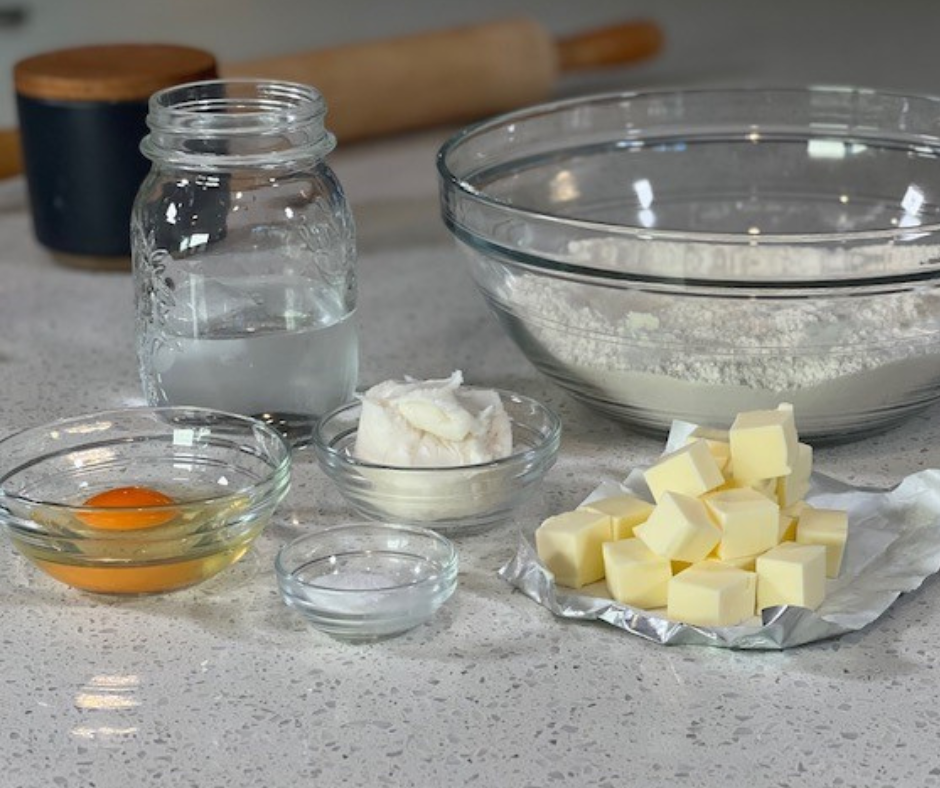
- 3 cups all-purpose flour
(Pro tip: Spoon flour into the measuring cup and level with a knife—scooping directly packs the flour and can throw off the ratio.) - 1 tsp kosher salt
- ⅔ cup high-quality lard, chilled (Try our VIVA Retail Lard)
- ½ cup cold butter, diced into ½-inch pieces
- 1 egg, beaten
- 1 tsp white distilled vinegar
- 6–8 Tbsp ice water
- 1 extra egg, for egg wash
Directions
For National Pie Day, Coast Packing Company celebrates the timeless craft of pie baking with this exceptional recipe from Coast Corporate Chef Greg Hozinsky. Combining high-quality lard and butter, this crust delivers unmatched flakiness, structure, and richness—creating the perfect foundation for both classic and modern pies, from lemon meringue to seasonal favorites.
(Makes enough dough for two pies or one pie with a lattice/crust topping)
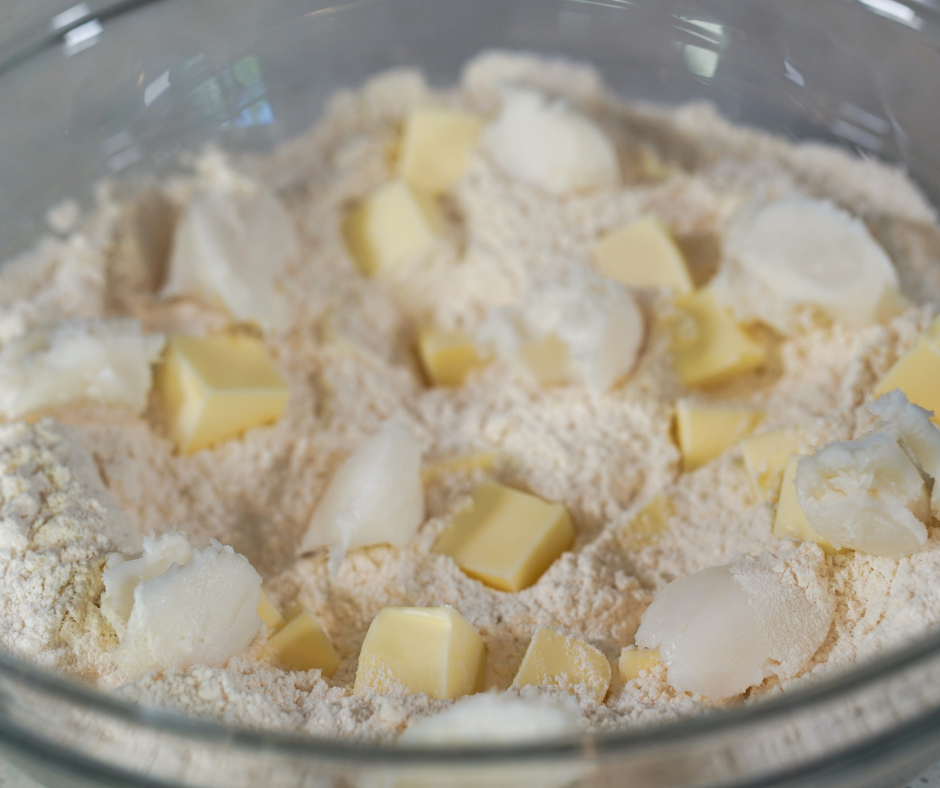
- Combine salt and flour, mix well in a large bowl, add in diced butter and lard (try breaking the lard into tablespoon-size pieces so it incorporates more evenly. Using a dough blender/cutter, cut the fat into the flour mixture until it has a consistency of a crumb — similar to the size of a bean. At this point, the flour should stick together when compressed between your fingers and thumb.
- Combine the vinegar, egg and 6 tbsp of water, beat together with fork. Evenly distribute over flour mixture using a fork mix until it just starts to come together; if the dough is dry and not coming together, add additional 1-2 Tbsp of water.
- When the dough starts to just come together, dump it onto a clean counter surface. Push the dough together until it adheres; you really don’t want to work to the dough much — you want the dough to be crumbly and flaky, not chewy.
- Cut the dough in half, form into 5 – 6 inch discs, wrap in plastic wrap, and refrigerate for at least 2 hours.
- When the dough is ready, remove from plastic film, dust counter or (if you have one) silicone pastry mat with flour. Sprinkle top of dough with additional flour. Using a rolling pin, begin to roll out dough; starting from the middle and working your way out, flip the dough and add flour often to prevent sticking.
- Once the dough is of even thickness (about 1/4 inch thick), gently place dough over pie dish (using the rolling pin to loosely lift and place the dough). If you like a more decorative pie dough, roll over the edges or, using your thumb and pointer finger on one hand and the pointer finger of the other, create a crimped decorative edge that is visually appealing.
If you want to fill your pie with a pre-cooked filling, you’ll want to completely cook the dough before introducing the filling; note that this might not be the case for all types of pies.
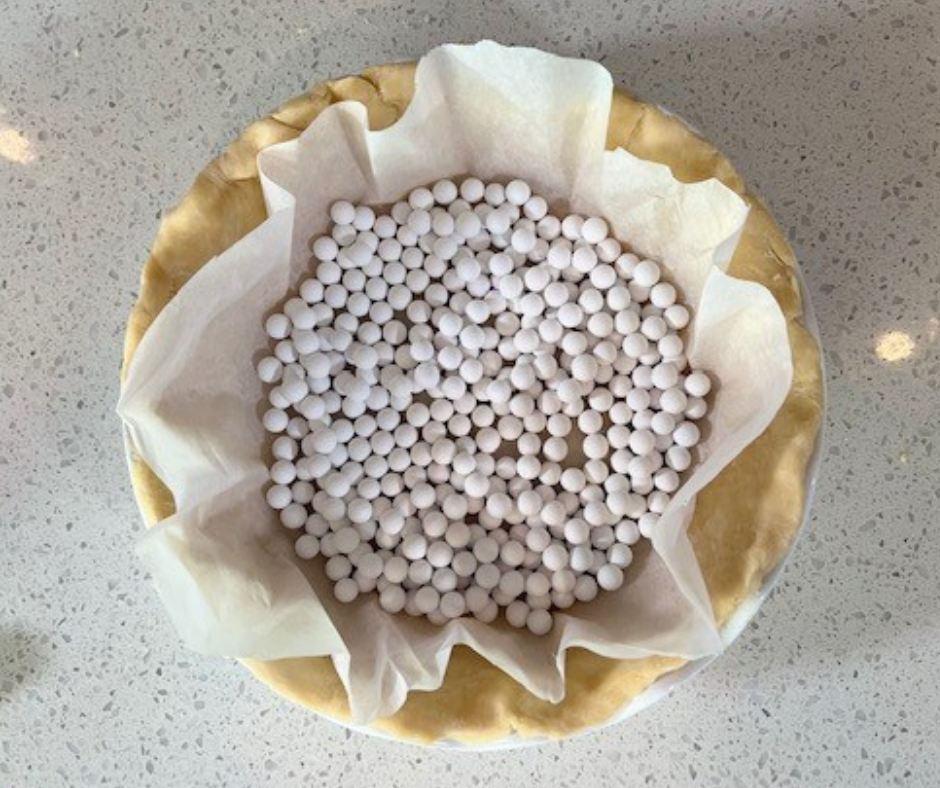
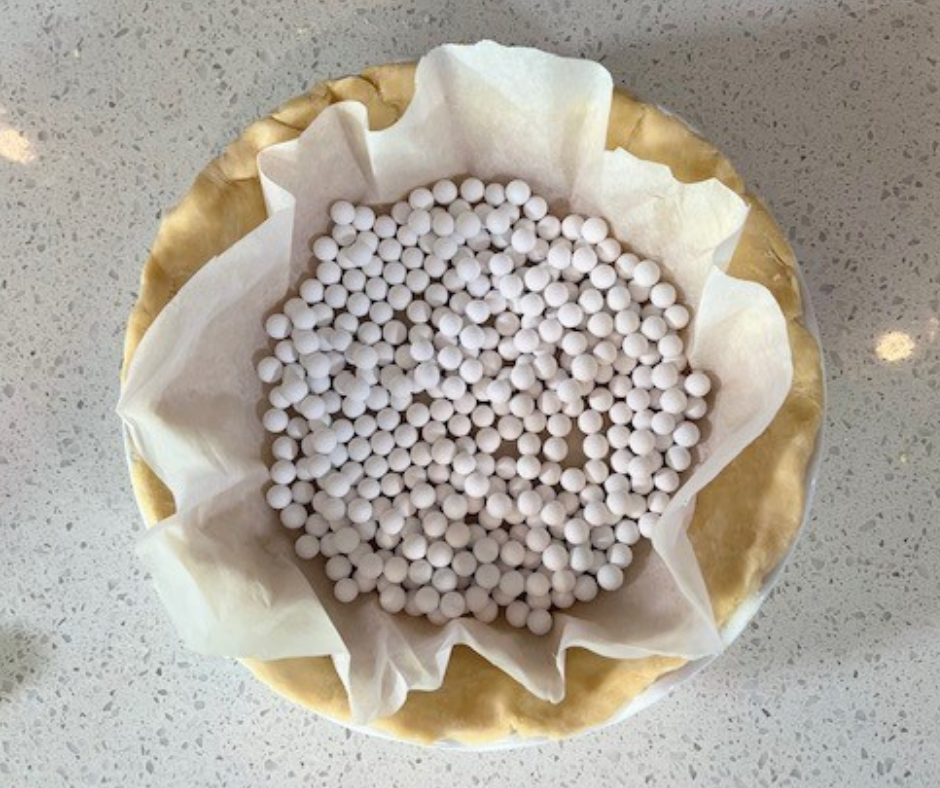
- To bake, use the tines of a fork to gently dock the bottom of the dough; place a piece of parchment into the pie dough and add pie weights (if you don’t have pie weights, dry beans are a good substitute to weigh down the bottom).
- Bake at 350 degrees in a preheated convection oven or 375 degrees if you don’t have convection. Cook for 20 minutes. remove weights and gently brush the decorative edge of the pie crust with egg wash (don’t have to do this, but it will result in a nicer looking finished pie crust).
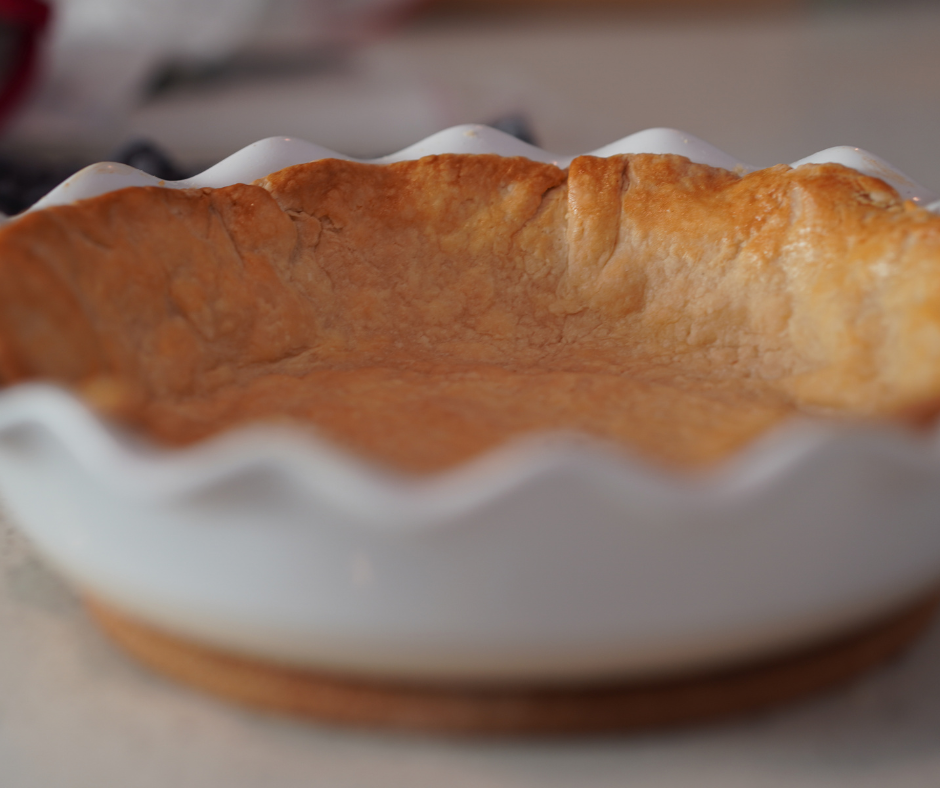
- Place back into the oven without the weights and cook an additional 20-25 minutes or until golden brown. After about 10-15 minutes, you might notice the top edge of the pie crust will brown quicker than the bottom of the pie crust; using a few small pieces of aluminum foil, tent the edges of the crust to cover them and help with even cooking. When the pie is golden brown, remove from the oven and allow to cool completely before adding filling.
Check out our recipe for lemon meringue pie filling here!
Share this recipe